Equus
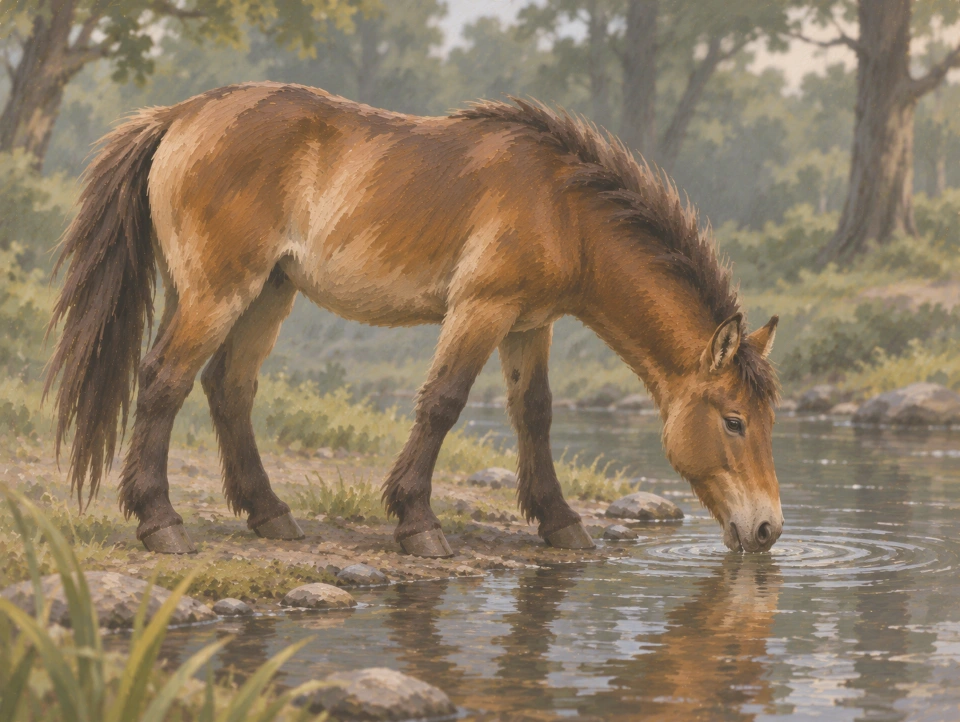
Equus is the only surviving genus of the family Equidae, encompassing modern horses, donkeys, zebras, and their extinct relatives. The genus originated in North America during the Pliocene and subsequently spread into Eurasia and Africa. During the Pleistocene, numerous species inhabited these continents, before horses became extinct in the Americas near the end of the Pleistocene. They were later reintroduced by European settlers.
Members of Equus are characterized by a single functional toe on each foot and high-crowned (hypsodont) cheek teeth with complex enamel folds. Features such as the shape of the protocone in upper cheek teeth and the enamel folding pattern in lower cheek teeth are particularly useful for distinguishing different evolutionary lineages and species.
Fossil remains of Equus are common in both Pleistocene North Sea and Florida deposits. However, considerable variation in tooth morphology, tooth wear, and skeletal proportions, as well as ongoing debate surrounding the taxonomy of extinct horses, often makes identification to species level difficult.
Within this group
And 19 finds not yet placed in a species.
In this collection 48 finds
Body parts
AlsoCalcaneus, Hoof core, Metatarsal, Pelvis, Skull
Featured 4


Teeth 27


